You can feel the temperature rise long before voices get loud. Shoulders lift, jaws set, and a familiar dance begins: one person pushes for answers, the other retreats into silence. Minutes later, two people who love each other stand on opposite sides of a canyon. Good couples therapy is not about eliminating conflict. It is about getting skillful at de-escalation, then repairing in ways that build trust rather than erode it.
I have sat with couples who can recite every detail of last Saturday’s fight, down to the time on the microwave clock. What they cannot recall is the moment things tipped from tense to flooded. That tipping point is where our work lives. If you can recognize it, slow it down, and turn back toward each other with steadier nervous systems, you change the entire trajectory of the evening, and over time, the relationship.
What escalation really looks like in the body
Before a word leaves your mouth, your nervous system is already narrating your story. Heart rate climbs, breathing gets shallow, vision narrows, and your brain trades nuance for certainty. That sequence is healthy when you need to outrun a real threat. In a kitchen argument, it distorts intentions and makes misinterpretation feel like truth.
In trauma therapy, we talk about the window of tolerance. Inside that window, you can think and feel at the same time. Outside it, you flip into fight, flight, freeze, or fawn. A raised eyebrow can read like contempt if it matches a pattern your body has learned to brace against. Partners who carry histories of neglect, betrayal, or unpredictable caregiving often move out of their window faster. The same is true for many neurodivergent clients whose sensory systems are already working hard to manage noise, bright light, or ambiguous social signals. A shrill beeping dishwasher at 9:30 p.m. Can be more than a nuisance. It can be the extra drop that spills the cup.
The most practical point here is simple. You cannot resolve a conflict while flooded. Your thinking brain is partially offline. De-escalation starts with physiology, not logic.
Map the pattern, not just the content
Couples usually start by describing the topic. Dishes, money, in-laws, a late text. The topic matters, but the process matters more. Most pairs fall into a pursue-withdraw pattern when stressed. One partner moves toward the problem and wants to talk it through now. The other slows down, needs space to think, and stops talking. Both are trying to make the relationship safer. Neither feels safe when using their preferred strategy.
If you can name the pattern while it is happening, you buy yourselves options. I often ask partners to try this sentence: We are in our loop. I am moving in. You are moving out. Can we pause the loop and try again in ten minutes? That shared language turns a blame story into teamwork. It also moves you from secondary emotions, like anger or exasperation, to primary emotions, like fear of not mattering or fear of being trapped. The tone shifts when you can say, I am scared I cannot reach you, instead of Why do you always shut down?
The mindset that makes repair possible
A good repair grows in the soil of humility and accuracy. Being right rarely creates closeness. Being honest about your impact does. The stance I coach is accountability over accuracy. Watch what happens when you replace, I did not mean it that way, with, I can see how that landed hard. Then ask a curious follow-up. What hit you the most about what I said? Curiosity keeps your partner talking, which keeps their nervous system from bracing alone.
Attachment science helps here. When partners feel securely attached, they scan less for danger. They assume misunderstandings are bumps, not cliffs. You can cultivate that security through small consistent moves: daily check-ins under five minutes, predictable goodbyes and reunions, small courtesies like warning your partner when you will be late. Those pieces sound minor. They are actually doses of regulation that make big conversations safer.
A reliable timeout that actually calms you both
Breaks work only when they are structured and trustworthy. A slammed door is not a timeout. It is a rupture. Build a protocol together during a calm moment so either of you can call it when needed.
- Name the signal without blame. Use a pre-agreed phrase and a hand signal. Example: I am too activated. I need a 30-minute timeout to get back in my window. I will come find you at 8:10. Separate gently and predictably. Physically move to different rooms if possible. No parting shots. Silence is safer than snark during this handoff. Regulate on purpose. Do activities that lower arousal: a brisk walk, paced breathing, a shower, or bilateral stimulation like alternating taps on your thighs. Skipping the phone doom-scroll matters because scrolling keeps you cognitively aroused and more certain of your grievance. Protect the return. Set a timer. Come back when you said you would, even if only to say, I need 20 more minutes. Reliability repairs trust. Long breaks, typically over 90 minutes, risk avoidance. Shorter than 20 minutes rarely gives your body time to downshift. Re-enter softly. Sit at an angle, not face to face. Start with a regulation update, not the argument. Example: My heart rate is down. I can track you again. Are you ready to continue for ten minutes?
Small detail with big effect: if you have a smartwatch, glance at your heart rate. Many people cannot think clearly once they are over roughly 100 beats per minute, sometimes lower. Waiting until the number drops becomes an easy, nonjudgmental form of biofeedback.
Language that cools conflict rather than fans it
There is a difference between expressing yourself and escalating. Softened start-ups cut reactivity by lowering blame and raising specificity. Compare these two:
You never help around the house. I do everything.
I am overwhelmed by the dishes tonight and I need help with the pans before 9.
The second is concrete and anchored in a need, not a personality judgment. In the lab and in real homes, this kind of start-up correlates with calmer outcomes. Pair it with a simple structure: one person speaks for up to two minutes, the other reflects the gist accurately before responding. Try varying pace and volume too. When couples decrease speed by even 10 to 20 percent, they catch warning signs sooner and interrupt escalation earlier.
If you grew up in a family where emotion was punished or mocked, naming feelings can feel risky. That is understandable. Build capacity gradually. You might start with only three categories: angry, sad, scared. Round out with a few body cues: clenched https://blogfreely.net/pothirajyo/emdr-therapy-for-grief-and-loss-when-memories-hurt jaw, heavy chest, hot face. This is not therapy at home, it is basic literacy around each other’s nervous systems.
Nonverbal co-regulation you can actually use
Talking is not the only tool. The body can calm the body. I teach partners a few micro-interventions:
- Breath pacing. One partner sets a gentle rhythm, inhaling for four counts and exhaling for six, while the other mirrors it. You can do this side by side on the couch with a shared metronome app set around 6 breaths per minute. Even two minutes can shift tone. Contact signals. Not everyone likes touch when upset, especially many neurodivergent folks and many trauma survivors. Get clear consent ahead of time. If touch is welcome, agree on a simple signal like two squeezes of the hand meaning I am here and I am not arguing. If not, use a visual anchor like placing a small object, a smooth stone or coin, on the table as a shared cue to slow down. Gaze choice. Direct eye contact is activating for some, grounding for others. Sit at 90 degrees on the sofa so you can alternate between looking at each other and looking out the window. That single seating change helps many couples stay present without feeling pinned.
These moves look small in writing. Practiced briefly and often, they add up to a felt sense of we can do hard things without hurting each other.
Adapting for trauma without centering the trauma
When one or both partners have a trauma history, arguments can carry echoes that neither of you expects. You are not trying to do trauma therapy in the living room. You are borrowing pieces from trauma-informed care to reduce reactivity and prevent reenactments.
- Predictability. Agree on conversation start and stop times. Unscheduled late-night talks often blend fatigue with old fear networks. Resourcing. In EMDR therapy, we build resources before processing painful memories. Couples can do a version of this together. Co-create a 60-second routine that reliably settles you both. Some pairs imagine a shared place that feels safe, then name three sensory details out loud. Others keep a playlist of two songs that shift state quickly. Use your resource any time the conversation feels slippery. Dual awareness. When an old memory fires, it makes the present feel like the past. Try naming this explicitly. Example: My chest is tight and I am remembering that night in college when I felt trapped. I know I am safe with you, and my body does not know that right now. Many partners soften when they realize they are not the enemy, they are standing next to one.
For clients who have done EMDR therapy, I often invite a brief form of bilateral stimulation during timeouts, such as tapping alternately on the knees while breathing evenly. This leverages neural pathways already trained in individual work. When used carefully, it helps return you to the present faster.
Safety note that bears repeating: if there is ongoing intimidation or physical harm, the task is not de-escalation together. The task is protection and specialized support. Good repair strategies do not fix unsafe dynamics.
Neurodivergent therapy insights that make conflict fair
Partnering across different neurotypes can be a beautiful fit, and it can be taxing without explicit systems. If one partner is autistic or ADHD, or both partners are, friction often comes from mismatched processing speeds, sensory thresholds, and implicit versus explicit communication styles.
Several adjustments help:
- Clarify the rules of the conversation on paper, not just verbally. A small whiteboard with something like speaker time 2 minutes, no interruptions, break words: yellow for slow down, red for pause gives structure without guesswork. Reduce sensory load. Turn off the TV, dim bright lights, reduce background noise, and avoid cooking smells if those are activating for either of you. Lower arousal first, then talk. Use scripts without apology. Scripting is not fake. It is compassionate. Try, I am having trouble finding words. I care and I will answer in 10 minutes after I write it down. Many conflicts melt by removing the pressure of rapid-fire replies. Respect literalness. If your partner asks for exactly 15 minutes, aim for exactly 15 minutes. Vague timing reads as disrespectful, even if you intend flexibility.
These are not special favors. They are access ramps so both partners can bring their best thinking online.
Borrowing from child therapy without being patronizing
In child therapy, we emphasize co-regulation and repair after ruptures. Parents learn to get on the child’s level, mirror, label feelings, and take responsibility for the adult part. Adults need similar experiences. The difference is tone. You are peers, not parent and child.
A pattern I encourage is the quick repair round. After a tense moment, try: I raised my voice. That was my responsibility. I see your face fell and you turned away. I imagine you felt alone. Is that right? If you guessed wrong, thank them for the correction. The cadence comes from parent-child work, the respect comes from adult partnership.
It helps to remember numbers here. If you have a 5-minute rupture and a 90-second repair that lands, you still gained connection. Do that consistently and the ratio of positive to negative interactions grows. In healthy couples, that ratio often hovers around five to one. You do not need to count. You need to notice what nourishes and do a little more of it on purpose.
Five repair phrases that work
- You matter more to me than being right. Let’s try again. I see how my tone made it worse. Here is what I meant, more gently. I got overwhelmed and shut down. I am back now. Do you want to finish this or park it? Parts of what you said make sense to me. The piece I am struggling with is ____. I can repeat back what I heard so you know I got it. Then can you do the same for me?
Say them slowly. Let the words catch up with your body.
How apologies land when they actually repair
Apologies fail when they are vague, defensive, or transactional. They land when they are specific, accountable, and paired with a concrete plan. Here is a simple structure that fits many situations:
- Name the behavior precisely. I rolled my eyes when you reminded me about the bill. Own the impact without argument. That probably felt dismissive and childish. Share the context, but not as an excuse. I was embarrassed I forgot again, and I let that run the bus. Offer a change you can keep. Next reminder, I will say thanks and put it in my calendar while we are talking. Check if anything is still needed. Is there more I can do right now to make this easier on you?
You do not need flowery prose. You need courage and clarity.
Rehearsing the conversation differently next time
Couples do well when they practice while calm. I have pairs run a 10-minute drill twice a week. They pick a small topic, set a timer for two minutes each, and follow their chosen structure: speaker reflects, listener summarizes, then swap. They finish with one concrete ask for the week. No big debates, no scorekeeping. Over a few weeks, the form becomes familiar. When a hard moment hits, your body recognizes the moves.
If one or both of you works well visually, draw your cycle on paper. Put the trigger at the top, then two arrows down: what Partner A does next, what Partner B does next. Add what each is feeling under the behavior. Finish with two new arrows for alternative moves. It is not art. It is a map. When you are in the fog, maps help.
The timing of repair
Not every rupture gets repaired immediately. Some need the night, or a couple of days, especially if trauma is hot or logistics are stacked against you. What matters then is signaling. Send a brief note like, I am not ready to talk content. I do care about us. I will check back tomorrow by 6. Specificity soothes. Vague assurances do not.
One red flag to watch: if repair gets delayed consistently and indefinitely, you are training the relationship to expect distance after pain. That pattern breeds anxiety and anger. If you notice repairs drifting, schedule them like you would any other important meeting. It may not feel romantic to put repair on a calendar. It is romantic to be reliable.
Where professional support fits
If you are looping through the same fight, despite earnest attempts, bring in help. A trained couples therapist can spot micro-patterns you cannot see from inside. Modalities like Emotionally Focused Therapy and PACT focus on attachment and regulation in the room, teaching you to track your own and each other’s states in real time. Gottman-informed approaches emphasize specific moves like softened start-ups and repair attempts. A good clinician will not force a script that does not fit your temperament. They will collaborate with you to find moves that you will actually use at 10 p.m. In your kitchen.
If trauma symptoms are strong, combine couples therapy with individual trauma therapy so you are not asking the relationship to carry unprocessed weight alone. EMDR therapy can reduce the intensity of triggers that keep hijacking your arguments. As processing takes hold, couples often report that the same comment no longer lights the same fuse. For some, neurodivergent therapy adds targeted strategies around sensory regulation, executive function supports, and communication scaffolding so both partners can participate on equal footing.
Child therapy may be relevant if you are parenting together and conflicts tend to erupt during family routines. A family systems lens helps you adjust not just the couple dynamic, but the way the household’s rhythms either inflame or cool the evenings.
Small anchors that change the feel of your home
Over time, de-escalation and repair stop being extraordinary events and start being the culture of your home. I look for the tiny, repeatable anchors:
- A shared phrase for timeouts, taped on the fridge. A dedicated corner chair where you both go to re-enter, angled, with a small lamp and two blankets. A standing 15-minute Sunday meeting where you pick one logistics topic and one connection topic. A silly ritual after tough talks. Some couples fist-bump. Others step outside to feel the air for 30 seconds. Rituals teach your nervous systems that hard conversations end in togetherness.
These are not bandaids. They are infrastructure.
A brief vignette, and what changed
A couple I worked with, call them Maya and Luis, would escalate in under five minutes. Maya spoke quickly when anxious and asked many questions. Luis got quiet, then monosyllabic, which infuriated Maya and shamed him. They loved each other, they were both exhausted, and they were stuck.
We built three moves. First, a 30-minute timeout protocol with a physical card either could place on the counter to call a pause. Second, a two-song playlist they used during the break, both songs selected for calm, no lyrical landmines. Third, a re-entry script that started with heart rate check and three reflection sentences before any problem-solving.
In the first month, they called six timeouts. Two were messy. By month two, their timeouts were routine, and they added a Sunday micro-meeting to plan chores with clear roles. Maya reported feeling less desperate mid-argument because she trusted the return. Luis reported feeling less shame because the structure gave him permission to slow down without being accused of avoiding. They still fought, of course. But when I checked in three months later, they each described two painful evenings that ended in real repair, a novelty for them. Their words: We still get heated. We also get back to each other faster. That is the win.
What you can try tonight
Choose one move and make it easy. Maybe it is agreeing on a timeout phrase and duration. Maybe it is practicing one repair sentence across silly, low-stakes moments so it is ready when you need it. If you are both willing, do a two-minute breath pace side by side on the sofa, just to see how it feels. The goal is not perfection. The goal is enough grounding that you can see your partner again as the person you chose, not as an adversary.
Conflict will still visit. With practice, you will treat it less like a house fire and more like a summer storm. You will close the windows, wait out the gusts, and then walk the rooms together, noticing what needs wiping up and what held steady. That is repair. That is partnership worth trusting.
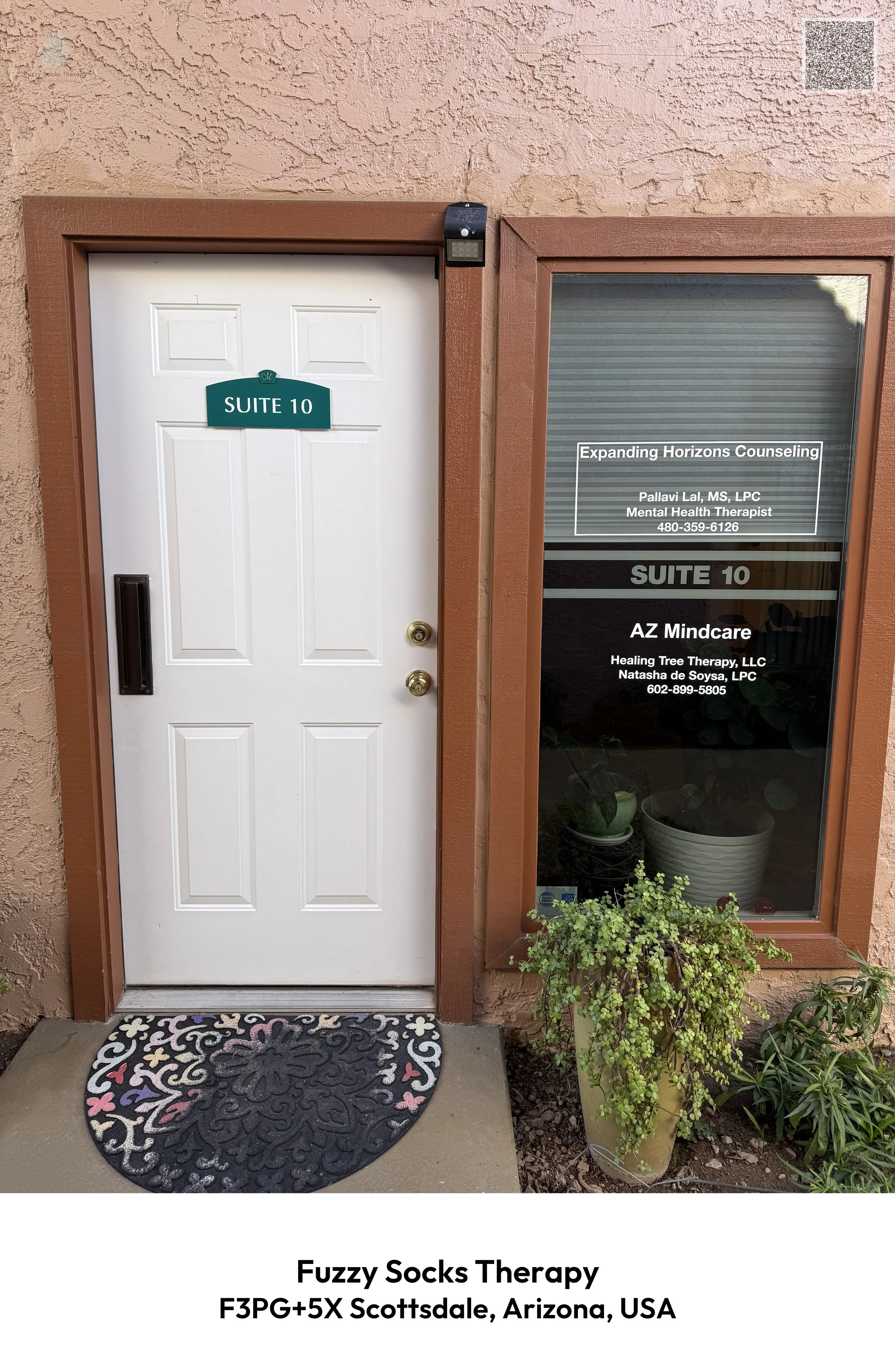
Address: 3295 N. Drinkwater Blvd., Suite 10, Scottsdale, AZ 85251
Phone: (720) 378-8454
Website: https://www.fuzzysockstherapy.com/
Email: [email protected]
Hours:
Monday: 9:00 AM - 5:00 PM
Tuesday: 9:00 AM - 5:00 PM
Wednesday: 9:00 AM - 5:00 PM
Thursday: 9:00 AM - 5:00 PM
Friday: 9:00 AM - 5:00 PM
Saturday: Closed
Sunday: Closed
Open-location code (plus code): F3PG+5X Scottsdale, Arizona, USA
Map/listing URL: https://maps.app.goo.gl/cqhwvXU4UMg6QL1YA
Embed iframe:
The practice offers in-person therapy in Scottsdale along with online sessions for clients in Arizona, Colorado, and Florida.
Clients can explore services such as trauma therapy, EMDR therapy, Deep Brain Reorienting Therapy, neurodivergent therapy, child therapy, couples therapy, discernment counseling, and parenting intensives.
Fuzzy Socks Therapy is especially relevant for people navigating trauma, dysfunctional family dynamics, ADHD, autism, relationship conflict, and emotional overwhelm.
The website presents a direct, practical therapy style focused on real tools and meaningful change rather than vague advice.
Scottsdale clients looking for trauma-informed psychotherapy can find support that combines deeper healing work with concrete skill building.
The practice also offers help for adult children of dysfunctional families, couples on the brink, and neurodivergent kids, teens, and adults.
To get started, call (720) 378-8454 or visit https://www.fuzzysockstherapy.com/ to book a free consultation.
A public Google Maps listing is also available for Scottsdale location reference alongside the official website.
Popular Questions About Fuzzy Socks Therapy
What does Fuzzy Socks Therapy help with?
Fuzzy Socks Therapy helps with trauma, dysfunctional family patterns, neurodivergence, relationship conflict, emotional overwhelm, and related challenges for individuals, couples, and families.
Is Fuzzy Socks Therapy located in Scottsdale, AZ?
Yes. The official website lists the office at 3295 N. Drinkwater Blvd., Suite 10, Scottsdale, AZ 85251.
Does Fuzzy Socks Therapy offer in-person and online sessions?
Yes. The official site says the practice offers in-person therapy in Scottsdale and online therapy in Arizona, Colorado, and Florida.
What therapy approaches are listed on the website?
The website highlights EMDR therapy, Deep Brain Reorienting Therapy, discernment counseling, play therapy, Dialectical Behavior Therapy, Emotionally Focused Therapy, and practical trauma-informed skill building.
Who provides therapy at Fuzzy Socks Therapy?
The official website identifies the therapist as Lianna Purjes.
Does the practice offer couples counseling?
Yes. The website includes couples therapy, couples intensives, and discernment counseling for couples deciding whether to stay together or separate.
Does the practice work with children and adolescents?
Yes. The site says the practice offers child therapy and support for children, adolescents, and their families.
How can I contact Fuzzy Socks Therapy?
Phone: (720) 378-8454
Email: [email protected]
Website: https://www.fuzzysockstherapy.com/
Landmarks Near Scottsdale, AZ
Drinkwater Boulevard is the clearest local reference point for this office and helps nearby clients place the practice in Scottsdale. Visit https://www.fuzzysockstherapy.com/ for service details.
Old Town Scottsdale is a familiar city landmark and a practical reference for people searching for therapy near central Scottsdale. Call (720) 378-8454 to learn more.
Scottsdale Civic Center is another recognizable local landmark that helps define the surrounding area for nearby professional services. The official website has current contact details.
Scottsdale Stadium is a well-known destination in the city and a useful point of reference for local users. Fuzzy Socks Therapy offers both in-person and online sessions.
Indian School Road is a major corridor that helps many residents orient themselves in Scottsdale. More information is available at https://www.fuzzysockstherapy.com/.
Fashion Square and the surrounding central Scottsdale area are widely recognized by local residents and visitors alike. Reach out through the website to book a free consultation.
Downtown Scottsdale is a strong local search reference for people seeking counseling and psychotherapy services in the area. The practice serves Scottsdale in person and multiple states online.
Scottsdale Road is another major route that helps define the broader service area for clients traveling from nearby neighborhoods. The practice supports individuals, couples, and families.
The Scottsdale arts and civic district is a useful area reference for those familiar with the city center. Visit the site to review specialties and next steps.
Central Scottsdale commuter corridors make this practice relevant for nearby residents who want in-person therapy, while online sessions add flexibility for clients in Arizona, Colorado, and Florida.