Intercultural couples live inside a wider field of languages, faiths, passports, food, and family customs. That diversity can be deeply alive and energizing. It can also create friction that standard advice does not solve. As a therapist, I have sat with partners arguing over whether a mother-in-law should have a key to the apartment, whether an infant should sleep alone or with parents, and whether a wedding needs to be small and secular or a three day religious celebration. None of these are small debates. They carry meaning about loyalty, identity, and safety.
Couples therapy provides a dedicated place to unpack that meaning without letting the relationship tear along the seams of culture. When partners learn to translate values rather than debate habits, they stop feeling like enforcers of their home culture and start acting like co-authors of a third culture that belongs to both of them.
Where differences show up in daily life
Most intercultural tensions trace back to repeated moments that seem minor, until they repeat a hundred times. Take time. One partner grew up in a place where the printed start time is the moment you leave home. The other learned that punctuality shows respect. After several late arrivals to dinners with colleagues, the punctual partner stops inviting the other, then feels guilty. The late partner feels judged, not only for habit but for identity.
Money scripts differ too. In some families, adult children are expected to send 10 to 20 percent of income to parents. In others, parents insist on financial independence by age 18. That difference can shift a monthly budget by hundreds of dollars. It also changes whether “our money” belongs to the couple or to a larger kin network.
Faith and ritual matter beyond belief. Fasting schedules change mood and energy. Holiday calendars alter work availability and travel planning. Food rules affect who cooks, what gets served, and whether a family dinner can truly be shared. Even language shapes intimacy. Many partners feel more competent and witty in their mother tongue. Jokes, apologies, and affection land differently when translated, especially late at night when patience runs thin.
Immigration and status add pressure as well. If one partner holds a precarious visa, the couple’s arguments about chores carry the low hum of existential risk. A missed paperwork deadline or a government backlog can tighten the emotional climate for months. Couples therapy does not remove those realities, but it can help the pair recognize and redistribute the weight so it does not silently tilt the relationship.
What a culturally responsive therapy room looks like
The method matters less than the therapist’s stance, but methods still help. Many intercultural couples benefit from emotion focused therapy for couples because it organizes conflict around attachment needs rather than proving who is right. Gottman based approaches add structure and research backed tools, which help partners learn a neutral language for repair and influence. Narrative therapy helps couples name cultural stories they inherited and choose which to keep.
The therapist’s job is to stay curious, slow down assumptions, and check their own biases. I ask, What does that ritual mean to you when you do it with family? What does it signal if you do not? I map the system around the couple. Who lives nearby, who sends money requests, what is the time zone for parents’ calls, what happens in the body when you hear a certain accent? We might draw a genogram that marks migrations, languages, and religious identities so the couple can see the transgenerational currents that shape arguments in the kitchen.
When language asymmetry makes conversation uneven, we do not pretend otherwise. We can use a shared second language, but I encourage partners to allow small moments in each person’s mother tongue with a brief summary. If needed and feasible, we may bring in an interpreter who understands confidentiality and couples dynamics. The goal is not to erase difference. It is to make difference livable.

Trauma therapy within intercultural couples work
Many intercultural couples carry personal or family trauma that touches daily life. A partner who survived political violence may flinch at loud voices. A person who endured discrimination may feel hyper vigilant when meeting the other partner’s family. Migration itself can be traumatic, especially when it involves perilous crossings, detention, or long separations. Trauma therapy tools can fit inside couples therapy so the relationship becomes a site of healing rather than reenactment.
When traumatic memories intrude on conflicts, we first focus on stabilization. Breath pacing, orientation to the room, and predictable session rituals help. If one partner has significant post traumatic symptoms that derail couple sessions, I may recommend parallel individual trauma therapy. EMDR therapy can be effective for processing specific memories that fuel outsized reactions during fights. For example, a partner who shuts down when a door closes might trace this to an arrest experience. Targeted EMDR can reduce the charge so the couple can safely discuss privacy or breaks during conflict.
We make clear agreements about pacing. The partner without the trauma history often worries, Am I walking on eggshells forever? The partner with the trauma history often worries, Will I be forced to relive things to make you comfortable? A plan might include individual EMDR therapy or another trauma modality alongside slower couples work, with shared language for when to pause. That plan protects both people. The couple learns to distinguish current conflict from past terror and to re enter connection after symptoms spike.
A practical way to talk across languages and values
Communication advice easily turns into platitudes. Intercultural couples need something more specific. I teach a micro structure that respects language differences and prevents one partner from dominating with fluency. Use it for any hot topic such as holidays, in laws, or money.
- Set a 20 minute container and agree on a single topic. Phones go on silent and face down. Speaker A has 5 minutes, uninterrupted. They speak slowly, two to three sentences at a time. After a thought, they pause. Listener B summarizes in their own words what they heard and checks, Did I get that? No debate yet, only clarification. Then they switch. Speaker B talks, listener A summarizes. They do two rounds each. Only after both complete rounds do they brainstorm actions that meet the values on the table. Write two to three concrete ideas and pick one to try for a week.
The structure seems rigid, but the rules create freedom. Slower delivery makes space for translation and prevents idiomatic monologues from steamrolling the conversation. Summaries reveal meaning beneath tasks. Often couples discover that a fight about where to eat is not about cuisine at all. It is about shared identity in public, or about preserving a memory of a parent who cooked a certain dish.
Power, privilege, and bias in the room
Not all differences are symmetrical. If one partner is white and the other is not, race can alter social safety in ways that the white partner does not feel. If one partner holds the local passport and the other relies on them for legal status, that is a built in power imbalance. Therapy done well names those forces, even if it stings. That naming does not assign blame. It prevents gaslighting.
Therapists must notice their own lenses. If a therapist comes from an individualist background, they might mislabel tight knit family involvement as enmeshment rather than mutual care. If they grew up with strict gender roles, they may accidentally reinforce unfair expectations. A good therapist invites correction. I ask couples to tell me when I show cultural bias, and I adjust in real time. When appropriate, we consider bringing culture bearers into the conversation, perhaps through a joint session with a respected elder, but only with both partners’ consent and clear boundaries.
Parenting across cultures
When children arrive, differences sharpen. Decisions about language, schooling, discipline, sleep, and food line up like dominoes. One parent may want strict schedules and independent sleep by three months. The other may plan for room sharing for years and flexible feeding. Both may be drawing on their own attachment histories and cultural scripts.
Child therapy can be a key support when a child shows stress symptoms from family conflict or from navigating two cultural spaces. A bilingual child who refuses to speak one language at home may be protecting a parent from school based ridicule. A teenager who resists religious observance may be negotiating identity at developmental speed, not rejecting a parent. Involving a child therapist who understands bicultural development helps parents coordinate rather than polarize.
Neurodivergent therapy https://andyqlxe564.iamarrows.com/child-therapy-for-ocd-exposure-play-and-parent-support belongs in this conversation too. If a partner or child is autistic, ADHD, or otherwise neurodivergent, cultural expectations about eye contact, time, schooling, or household noise may clash more intensely. Neurodivergent adults from high context cultures often report cumulative micro injuries from repeated misreadings. A therapist skilled in neurodivergent therapy will adapt communication goals and sensory strategies so the couple can build supportive routines without pathologizing culture or neurology.
I have worked with a couple where one parent valued academic excellence as the primary route to stability, while the other valued unstructured play and community time. Their 8 year old, recently diagnosed with ADHD, began to dread homework and to fib about assignments. Rather than framing it as defiance, we adjusted the environment. We added short movement breaks, chunked tasks, and used the home language during transitions. The parents created a weekly 15 minute cultural story time where each shared a childhood memory about learning. Within six weeks, the child’s refusal decreased and both parents felt less like adversaries.
Rituals that help couples build a shared culture
Strong intercultural relationships are not built on constant compromise. They are built on intentional rituals that reflect both lineages. Weekly check ins help, but they need teeth. I often propose a 30 minute Sunday meeting with a written agenda that includes logistics, appreciation, and one values conversation. That values slot might address, How do we want to do the winter holidays this year, knowing we cannot travel to both families?
Shared cooking works as more than leisure. Pick one recipe from each family monthly and host friends who appreciate both cuisines. Make the evening a small celebration with one rule: the partner not from that culture leads as the honored guest. Then switch next month. It shifts power and pride in embodied ways that pure talk cannot.
For couples navigating religious difference, I suggest agreeing on a small daily practice that honors both traditions. Light a candle and name one gratitude and one intention. Alternate the language used. These micro rituals build a felt sense of joint identity even when larger practices diverge.
Common stuck points, and ways through them
Holidays often become proving grounds. Many couples fall into a pattern of alternating years, which seems fair but fails when one family expects a weeklong series of events and the other expects a quiet day. Instead of strict alternation, budget travel by impact and plan hybrid celebrations near home. In one case, a couple hosted a community New Year dinner for local friends from both cultures and shared a live video with elders abroad. It cost them two evenings of preparation and under 150 dollars for ingredients and rentals, but they reported the holiday finally felt like theirs.
In laws and privacy issues can submerge a couple if not addressed early. In some cultures, a parent’s visit lasts several months and includes help with childcare. In others, a weekend feels long. Couples therapy invites transparency about the emotional meaning of visits, then moves to logistics. If a parent needs to stay three months to provide postpartum care, where will they sleep, what chores will they handle, what time of day belongs to the couple alone? Planning protects intimacy.
Money merges cultural scripts with math. Some couples open a joint account for shared bills and keep individual accounts for remittances and discretionary spending. Others set a fixed monthly transfer to family and review it annually. The amount is less important than the clarity. I ask partners to write their non negotiables and flexibles. For one person, paying for a sibling’s exam fees might be non negotiable. For the other, saving for a down payment is the non negotiable. We build a budget that treats both as legitimate identities, then look for waste that does not serve either value.
Language can become a wedge without malice. The more fluent partner often wins arguments through speed. The less fluent partner withdraws or grows resentful. Couples therapy slows the pace and invites code switching with consent. If one partner longs to hear love expressed in their mother tongue, we can practice simple phrases that the other can say comfortably. I have seen a single sentence, delivered clumsily but sincerely, lower a wall that hours of debate could not touch.
When individual healing supports the couple
Couples therapy does not replace personal work. If one partner carries untreated depression, anxiety, or a history of complex trauma, the relationship often becomes the shock absorber. Trauma therapy, whether EMDR therapy, sensorimotor work, or parts based approaches, can soften reactivity and open capacity for curiosity about the other’s culture. I have watched a partner who grew up with chaotic caregiving learn to notice their own fight or flight speed, take a two minute sensory break, and return present. After a few months, their arguments lost the sudden cliff edge quality that had scared both of them.
There are times when a pause on hot button cultural negotiations makes sense while one partner receives trauma treatment. That pause is not avoidance. It is triage. We set a time frame, say eight weeks, and focus on stabilization practices that benefit both people, such as sleep routines and alcohol limits. The couple still meets weekly but tackles safer topics. We return to bigger differences when both nervous systems have more room.
How to pick a therapist who can bridge cultures with you
The right therapist will not know every culture, but they will know how to learn. When interviewing therapists, a few focused questions can save months.
- What is your experience working with intercultural couples, and how do you address power differences such as immigration status or race? How do you handle language differences in session? Are you open to brief use of our mother tongues with summaries? What models do you draw from in couples therapy, and how do you adapt them culturally? If trauma is part of our story, how do you integrate trauma therapy or EMDR therapy with couples work? How do you include children or collaborate with child therapy if parenting becomes a flashpoint?
Notice how the therapist answers. Do they give crisp examples from past work, or speak in vague ideals? Do they acknowledge their own learning curve? Do they ask about your support networks and spiritual or community resources? Logistics matter too. If one partner travels or lives under visa uncertainty, a therapist who offers telehealth and flexible scheduling reduces stress.
When crisis hits
Intercultural couples face the same acute crises that any couple might, but the context adds layers. An affair may carry not only betrayal but also fear of losing immigration sponsorship. A sudden visa denial can drop the couple into involuntary long distance. In those moments, therapy becomes less about insight and more about immediate safety and stabilization.
We triage. First, ensure physical and legal safety. Second, agree on a short term structure for communication that prevents panic cycling. For a couple separated by borders, that might be two scheduled 30 minute calls daily with no texting between, plus a shared document that tracks tasks like lawyer emails and document collection. For a couple reeling from betrayal, that might be daily check ins that answer three questions only: Where were you today, any triggers we should know about tomorrow, and one appreciation. Boundaries contain chaos so repair or respectful separation can unfold.
How to know you are making progress
Progress is not abstract. You can measure it in minutes and choices. Arguments last less time, often under 20 to 30 minutes instead of rolling on for hours. Repair attempts happen sooner and succeed more often. You begin to predict each other’s triggers and needs without resentment. The couple starts naming shared values that draw from both cultures rather than competing for dominance.
I encourage couples to track a few simple metrics for eight weeks. How many times per week did you complete your structured 20 minute talk? What was your average time to repair after a conflict? How many shared rituals did you complete? Did you implement one action from your values brainstorm, and what was the perceived impact on a 1 to 10 scale? Numbers do not tell the whole story, but trends keep hope realistic.
Qualitatively, you will notice a softening. The partner who once felt like a border guard for their culture begins to trust that their heritage will not disappear. The partner who feared submerging their identity sees it visible in the home. It is common to cry in sessions not from pain, but from relief when a long misunderstood habit finally makes sense.
Edge cases and trade offs
Not every difference can be harmonized. Some couples face irreconcilable values around child religion or where to live long term. Therapy can still help by clarifying the stakes and avoiding punitive patterns. If a move would cut one partner off from their entire support network, it is fair to say that the cost is too high, even if the career upside is large. If a religious conversion is a requirement for marriage in one family, partners may need to decide whether symbolic participation is enough or whether integrity requires walking away. These are adult decisions. A good therapist resists the urge to force a happy ending and instead supports clear, kind choices.
There are also seasons. A couple might lean more into one culture during early childcare years to access grandparent help, then re balance later. A partner may agree to a modest remittance for a set period with a review date. The spirit is not permanent victory, but responsive stewardship of a shared life.
Closing thoughts
Intercultural love stretches people. It asks you to learn new calendars, new idioms, and new grieving practices. It gives you extra chances to practice humility. Done with care, the work pays dividends. You gain not only a partner, but a wider map of what it means to be human.
Couples therapy is at its best when it protects that expansion. It creates a room where neither of you has to shrink. It supplies language for talking about values without moralizing. It invites trauma therapy or EMDR therapy when old pain knocks the present off balance. It brings in child therapy and neurodivergent therapy when the family system needs alignment. Most of all, it holds the belief that you can build a third culture together, one meal, one holiday, one quiet check in at a time.
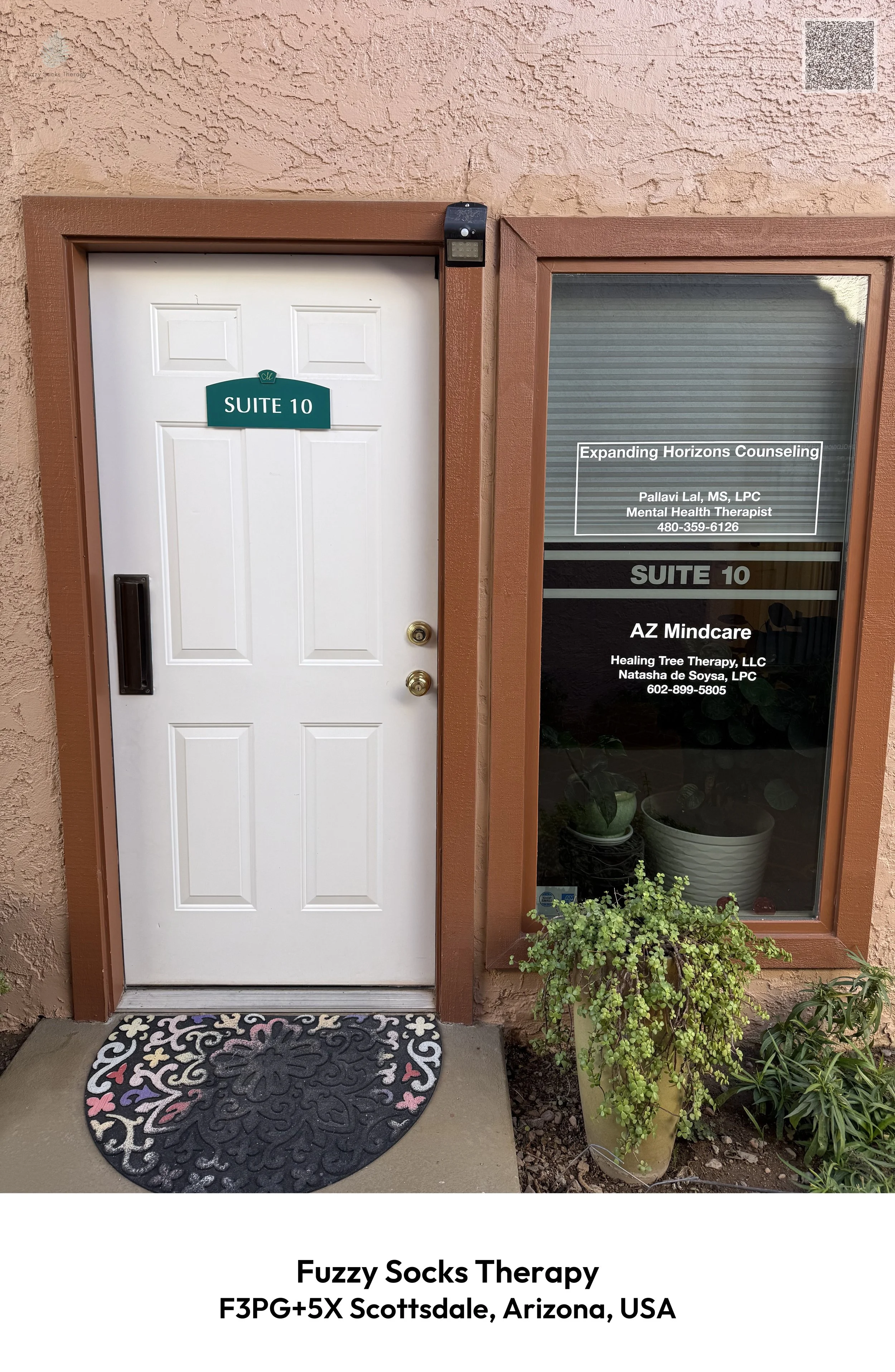
Address: 3295 N. Drinkwater Blvd., Suite 10, Scottsdale, AZ 85251
Phone: (720) 378-8454
Website: https://www.fuzzysockstherapy.com/
Email: [email protected]
Hours:
Monday: 9:00 AM - 5:00 PM
Tuesday: 9:00 AM - 5:00 PM
Wednesday: 9:00 AM - 5:00 PM
Thursday: 9:00 AM - 5:00 PM
Friday: 9:00 AM - 5:00 PM
Saturday: Closed
Sunday: Closed
Open-location code (plus code): F3PG+5X Scottsdale, Arizona, USA
Map/listing URL: https://maps.app.goo.gl/cqhwvXU4UMg6QL1YA
Embed iframe:
The practice offers in-person therapy in Scottsdale along with online sessions for clients in Arizona, Colorado, and Florida.
Clients can explore services such as trauma therapy, EMDR therapy, Deep Brain Reorienting Therapy, neurodivergent therapy, child therapy, couples therapy, discernment counseling, and parenting intensives.
Fuzzy Socks Therapy is especially relevant for people navigating trauma, dysfunctional family dynamics, ADHD, autism, relationship conflict, and emotional overwhelm.
The website presents a direct, practical therapy style focused on real tools and meaningful change rather than vague advice.
Scottsdale clients looking for trauma-informed psychotherapy can find support that combines deeper healing work with concrete skill building.
The practice also offers help for adult children of dysfunctional families, couples on the brink, and neurodivergent kids, teens, and adults.
To get started, call (720) 378-8454 or visit https://www.fuzzysockstherapy.com/ to book a free consultation.
A public Google Maps listing is also available for Scottsdale location reference alongside the official website.
Popular Questions About Fuzzy Socks Therapy
What does Fuzzy Socks Therapy help with?
Fuzzy Socks Therapy helps with trauma, dysfunctional family patterns, neurodivergence, relationship conflict, emotional overwhelm, and related challenges for individuals, couples, and families.
Is Fuzzy Socks Therapy located in Scottsdale, AZ?
Yes. The official website lists the office at 3295 N. Drinkwater Blvd., Suite 10, Scottsdale, AZ 85251.
Does Fuzzy Socks Therapy offer in-person and online sessions?
Yes. The official site says the practice offers in-person therapy in Scottsdale and online therapy in Arizona, Colorado, and Florida.
What therapy approaches are listed on the website?
The website highlights EMDR therapy, Deep Brain Reorienting Therapy, discernment counseling, play therapy, Dialectical Behavior Therapy, Emotionally Focused Therapy, and practical trauma-informed skill building.
Who provides therapy at Fuzzy Socks Therapy?
The official website identifies the therapist as Lianna Purjes.
Does the practice offer couples counseling?
Yes. The website includes couples therapy, couples intensives, and discernment counseling for couples deciding whether to stay together or separate.
Does the practice work with children and adolescents?
Yes. The site says the practice offers child therapy and support for children, adolescents, and their families.
How can I contact Fuzzy Socks Therapy?
Phone: (720) 378-8454
Email: [email protected]
Website: https://www.fuzzysockstherapy.com/
Landmarks Near Scottsdale, AZ
Drinkwater Boulevard is the clearest local reference point for this office and helps nearby clients place the practice in Scottsdale. Visit https://www.fuzzysockstherapy.com/ for service details.
Old Town Scottsdale is a familiar city landmark and a practical reference for people searching for therapy near central Scottsdale. Call (720) 378-8454 to learn more.
Scottsdale Civic Center is another recognizable local landmark that helps define the surrounding area for nearby professional services. The official website has current contact details.
Scottsdale Stadium is a well-known destination in the city and a useful point of reference for local users. Fuzzy Socks Therapy offers both in-person and online sessions.
Indian School Road is a major corridor that helps many residents orient themselves in Scottsdale. More information is available at https://www.fuzzysockstherapy.com/.
Fashion Square and the surrounding central Scottsdale area are widely recognized by local residents and visitors alike. Reach out through the website to book a free consultation.
Downtown Scottsdale is a strong local search reference for people seeking counseling and psychotherapy services in the area. The practice serves Scottsdale in person and multiple states online.
Scottsdale Road is another major route that helps define the broader service area for clients traveling from nearby neighborhoods. The practice supports individuals, couples, and families.
The Scottsdale arts and civic district is a useful area reference for those familiar with the city center. Visit the site to review specialties and next steps.
Central Scottsdale commuter corridors make this practice relevant for nearby residents who want in-person therapy, while online sessions add flexibility for clients in Arizona, Colorado, and Florida.