When a child starts therapy, progress does not live only in the clinic. It shows up in the lunch line, the art room, the basketball court, and the car ride home. School is where children rehearse the skills we teach: emotional regulation, communication, flexible thinking, help-seeking. Without coordination between the therapy room and the classroom, a child ends up juggling two separate playbooks. With thoughtful collaboration, we create a single support team that helps the child succeed where it counts.
Why the bridge between clinic and classroom changes outcomes
I once worked with a fourth grader who froze every time a timed math test came out. In therapy, we practiced paced breathing and a private hand signal for help. His teacher never saw the hand signal, because no one had told her it existed. The child blamed himself for “forgetting” the tools, the teacher labeled it defiance, and his family braced for meltdown days. After one structured call with the teacher, we put a sticky note on the right corner of his desk as a visual cue and agreed that he could start the test in the hallway for the first minute. Two weeks later he passed a quiz he had failed three times. Nothing in his abilities changed. We aligned the adults.
The stakes are concrete. Disconnected plans lead to mixed messages, accidental punishment of coping attempts, and data that do not match. Alignment brings consistent language, timely adjustments, and fewer power struggles. It also reduces burnout for parents and educators who are trying, in good faith, to solve the same puzzle with incomplete pieces.
Who sits at the table
Every school system and family constellation looks different, but effective teams share a few anchors. On the school side, a special educator, case manager, or counselor is often the hub. General education teachers bring day-to-day observations that no report can capture. A school psychologist interprets testing data, and a nurse weighs in on medical needs. In some districts, a behavior specialist or occupational therapist supports sensory and regulation plans.
On the clinical side, the child therapy provider coordinates goals with the family, shares appropriate information, and helps translate therapy concepts into classroom routines. When trauma therapy is active, the therapist tracks triggers and dissociation risks during the school day. If EMDR therapy is part of the plan, the provider may schedule sessions around high-stress academic periods and equip school staff with grounding strategies that do not replicate bilateral stimulation inappropriately. Families often carry the heaviest coordination load. When parents are not aligned, couples therapy can be the missing piece that allows school plans to stick at home.
Do not forget the student. Even a six-year-old can draw their “toolbox” and identify who to ask for help. By middle school, students should coauthor their plans. When the child is neurodivergent, particularly autistic, ADHD, or dyslexic, involving them in design helps prevent well-meaning goals from feeling like demands to mask their true needs.
Consent, privacy, and ethical guardrails
Before any exchange of information, secure a written release of information. Therapy records are protected by HIPAA or state-specific mental health laws. Schools fall under FERPA. A HIPAA release does not automatically authorize a school to share educational records back, and a FERPA consent does not open a therapist’s full file. Draft releases that name specific people, topics, and time frames. I prefer two-way releases with a review date every six months. If there is a custody order, verify who has legal authority to consent. In split custody, collect court documents rather than relying on memory.
With adolescents, confidentiality requires even more care. Many states allow teens to consent to some services on their own. I routinely meet with the teen to define what we will share at school: safety issues always, coping tools usually, trauma content almost never. Email is convenient but not always secure or nuanced. When conflict is brewing, schedule a call instead of building a paper trail that hardens positions.
How to start the collaboration without overwhelming anyone
Most teams fail not for lack of care, but for lack of structure. Start small. Agree on a primary point person at school and a primary contact in the clinic. Put names on the plan, not just roles. Use short, regular touchpoints rather than long, infrequent meetings that try to solve everything at once.
Quick-start checklist for the first month:
- Obtain and file signed releases that specify people, topics, and an end date. Identify a school point person and a clinic point person, with weekly or biweekly contact windows. Align on one or two priority goals that matter during the school day, stated in observable terms. Choose a simple data method the school can sustain, such as a two-minute daily rating. Agree on a safety or escalation plan with clear thresholds and phone numbers.
What to share and what to skip
Therapists sometimes write rich narratives that do not translate into classroom action. Schools sometimes send data that do not connect to therapeutic targets. Aim for essential, actionable information.
Share:
- Functional descriptions of behaviors and likely triggers. For example, “When transitions are announced less than one minute before they occur, Sam often rips paper or hides under the desk.” Replacement skills and concrete supports. “Sam is practicing a ‘pause card’ to request two extra minutes. If denied, he will likely escalate.” Timing sensitivities. “EMDR therapy sessions on Tuesdays may leave Sam emotionally tender for a few hours. He benefits from a quiet lunch that day.” Safety indicators. “If you notice glassy eyes and slowed response, treat it as possible dissociation. Offer water, reduce verbal input, orient to present: date, class, teacher’s name.”
Skip:
- Trauma details that can sensationalize or bias staff. Speculative diagnoses that are not confirmed. Private family dynamics that do not affect school safety or accommodations.
From therapy goals to classroom supports
Translate therapy targets into school routines. If a child is building frustration tolerance, practice it during math challenge problems and art critiques, not just in role-plays. When designing accommodations under a 504 plan or goals under an IEP, connect each item to a function, not a label.
Examples that hold up:
- For a child in trauma therapy with hypervigilance, seat selection away from doorways may reduce startle responses. Pair with pre-briefs before fire drills. For a student receiving neurodivergent therapy who masks all day, plan two predictable sensory breaks and normalize stimming. Teach the class that movement tools are learning tools, not rewards. For an anxious reader, consider “whisper reading” with a peer or teacher before reading aloud, reducing performance shock without removing practice.
Avoid accommodations that remove every demand. We aim for access plus stretch. A sensory-avoidant child needs alternatives to the pep rally, and also needs a plan to rejoin learning with dignity.
Aligning on data and progress monitoring
Pick two or three metrics that match your goals and that the school can actually collect. If the plan requires a 15-minute coding sheet, it will die on the vine. A simple example: for a fifth grader working on respectful refusal, the teacher rates the day 0 to 2 on “Used pause card instead of arguing” and “Recovered from upset within 5 minutes.” The therapist receives a weekly summary. In therapy, we graph trends and adjust the skill focus. If a child uses the pause card on 8 of 10 days but still refuses in unstructured times, we target the cafeteria environment next.
Tie school metrics to clinical ones when possible. If EMDR therapy is reducing Subjective Units of Distress from 8 to 4 during recollection work, see whether school ratings on avoidance during history class also drop. If not, suspect a context cue you have not addressed, like a teacher’s tone or a peer dynamic.
Trauma-informed collaboration without overprotecting the child
Trauma therapy is most effective when the school environment reduces unnecessary threats while supporting mastery. A frequent mistake is turning the child into a fragile exception. Another is dismissing behavior as “manipulative” when it is a trauma pattern.
Key principles in practice:
- Safety cues beat safety lectures. Predictable routines, soft lighting in one corner of the room, and a friendly greeting at the door lower arousal far more than a poster about coping skills. Choice within boundaries calms the nervous system. Offer two acceptable options: “Start at problem 3 or problem 5.” This is not caving to avoidance; it is structuring approach behavior. Avoid public processing of trauma. Teachers can support grounding by using neutral scripts: “You are in Ms. Lee’s class. It is Tuesday. Your feet are on the floor.” No need to reference the trauma.
If a child uses EMDR therapy, school staff do not need to replicate bilateral stimulation. What they can do is encourage brief sensory reorientation: hand to heart, feet press into floor, look around and name three blue items. They can also avoid scheduling high-stress tests right after intensive sessions. Families can request that PE, band, or quiet library time follow therapy days if the timetable allows.
Supporting neurodivergent learners without masking their needs
Neurodivergent therapy aims to equip a child to work with their brain, not against it. In schools, that often means shifting from compliance goals to participation goals. Hand-flapping might be movement regulation, not misbehavior. Eye contact may cause pain or distraction. Executive functioning deficits look like laziness to the untrained eye.
Translate this into plans:
- Normalize communication alternatives. If speaking out loud is hard, allow typed or recorded answers. Teach classmates that difference does not equal deficiency. Teach the environment, not just the child. A sound map of the classroom helps an autistic student understand and plan for daily noises. A visual schedule posted at eye level helps the whole class. Reject “earned access” to basic regulation. Headphones and wobble stools are entry tickets to learning, not gold stars for finishing work.
Watch for subtler collisions. A child masking all day might melt down at 3:15. This is not the parent’s failure; it is a systems issue. Adjust the school day to include decompressing micro-moments. A two-minute transition with preferred music can change everything.
Meetings that do not drain everyone
I have sat in meetings with 12 adults and a child who felt like a defendant. It helps to keep structure visible and roles clear. Share a brief agenda ahead of time and time-box decisions. Invite the student for the part that honors their voice, not the entire administrative slog.
A simple meeting agenda that works:
- Open with the student’s strengths and what went well since last contact, stated concretely. Review the two or three priority data points and patterns, not every anecdote. Decide on one adjustment to try for 2 to 4 weeks, with a named owner. Clarify the crisis or escalation pathway and who calls whom for what. Set the next touchpoint date and who will gather what data.
When emotions run high, narrate the process. “We have 15 minutes left, and we still need to confirm who is updating the visual schedule. Let’s capture concerns for the next agenda.”
When parents do not agree
School teams get stuck when caregivers pull in opposite directions. Sometimes this reflects deeper strain at home. Couples therapy focused on co-parenting can reduce mixed messages. I have watched progress accelerate when parents agreed on three house rules and a shared response to school calls. If joint sessions are not feasible, ask each caregiver separately what success looks like for them in the next 30 days. Reflect back points of overlap for the school plan.
Legal realities matter. If there is an active protection order, guide all communication through permitted channels. If one parent withholds consent for release of information without cause, explain to the school that therapy cannot share details but can still provide general recommendations that any student could use.
Handling conflict with the school without going to war
Disagreements happen. A teacher may feel unsupported, or a parent may feel dismissed. Start with curiosity and specifics. “In the last two weeks, the visual schedule was not posted on three days, and Melvin’s referrals spike on those days.” Avoid global blame. If good faith efforts fail, use the district’s chain of resolution: case manager, principal, then special education director. Mediation is an option in many states. Due process is a legal right, but it is expensive and slow. Hold it as a backstop, not a communication strategy.
Practicalities in rural and resource-limited settings
Not every school has a full-time counselor or behavior specialist. In small districts, the classroom teacher is the de facto case manager. Simplify plans. A two-sentence regulation script and a timer often beat a 12-page Behavior Intervention Plan that no one can maintain. Telehealth can allow the therapist to join a five-minute check-in between classes. Consent forms should explicitly allow video participation. Where bandwidth is limited, phone calls at predictable times can be just as effective.
Community resources can stand in for missing services. A librarian who offers a quiet job shelving books twice a week might be as valuable as a formal social skills group. Youth sports coaches can learn a cueing system that matches the school’s.
Technology and communication cadence
Shared digital tools help, but only if they are simple and secure. Many districts use platforms like Google Drive under FERPA safeguards. Others ban outside access. When platforms do not align, fall back to low-tech solutions. A paper “home-school” notebook with checkboxes on two key behaviors travels between settings. One fifth grade team used a laminated card with a dry erase dot scale for emotion rating. The child carried it on a lanyard, and staff across settings used the same language. The therapist took a photo at each session to track trends.
Choose a cadence that respects attention. A biweekly 15-minute call produces more value than monthly marathons that everyone dreads. If nothing has changed for two cycles, either the plan is working, or everyone is avoiding the hard issue. Name it gently.
Case vignettes that show the mechanics
A middle schooler, referred for school refusal, had missed 18 days in two months. In child therapy, we mapped his morning sensory overwhelm and the dread of the crowded front entrance. The school counselor negotiated a side door arrival with a staff greeter for one month, then a phased re-entry through the main entrance. We taught the child to request a five-minute reset in the library after arrival. Attendance rose to 80 percent in four weeks, then 92 percent. The school’s willingness to adjust a ritual signaled safety; therapy supplied the skill for staying.
Another student, eight years old, autistic and hyperlexic, received neurodivergent therapy focusing on self-advocacy and sensory literacy. He flapped when excited, which led to peer teasing. Instead of a “quiet hands” rule, the teacher introduced a class lesson on how bodies show excitement. The child helped rename his movement as “rocket hands” and agreed on a safe standing spot during read-alouds. Teasing decreased, and his participation improved. The therapist reinforced self-description scripts: “My body needs to move to listen.”
Crisis plans that are humane and realistic
Even with the best supports, children sometimes enter crisis. A good plan prevents the pile-on of adults, avoids restraint unless safety demands it, and preserves the child’s dignity. Write down thresholds. “If the child throws small objects but is not approaching people, staff step back three feet, lower voices, https://www.fuzzysockstherapy.com/ and offer the calm corner. If the child moves toward others with raised objects, clear the area and call the crisis team.” Practice scripts. “I am here. You are safe. We will wait together.”
Make reentry gentle. After a suspension, schedule a brief repair meeting that includes the child, not just administrators. Focus on what needs to be different in the environment and in the plan, not only on apologies.
When therapy types intersect with school life
The label on therapy matters less than how it translates to the school day, but a few specifics help:
- Trauma therapy often surfaces new grief or anger. Ask teachers to watch for “anniversary reactions” around dates the family names. You can normalize extra check-ins that week without broadcasting the reason. EMDR therapy can temporarily increase emotional lability. On session days, favor structured, low-evaluative tasks. Teach a neutral grounding routine the class can use, not one that singles out the student. Couples therapy for caregivers can shrink school conflict. Aligned routines at home change the morning and evening bookends that often sabotage the school day. Child therapy for anxiety, depression, or OCD often uses exposure. The school can be the exposure site. For a child who avoids glue due to contamination fears, art class becomes a planned, graduated practice with pre-arranged cleanup and a nonjudgmental coach. Neurodivergent therapy reframes behaviors as differences. Translate that into permission for different tools. A keyboard during timed writing is not a privilege. It is a ramp.
Cultural humility and language access
Plans fail when they do not fit the family’s culture or language. If a caregiver prefers to speak Spanish at meetings, secure a qualified interpreter rather than asking a bilingual staff member who is not trained. Ask about culturally relevant stressors. A child who clenches when a loud adult male stands close may be responding to experiences at the border or in the neighborhood. Do not require a child to make eye contact if the family views it as disrespectful. Teach teachers to read engagement through other cues.
Common pitfalls and how to sidestep them
Two traps show up repeatedly. The first is over-accommodation, where every friction point is removed. The child feels temporarily better, but skills do not grow. Anchor supports to participation, and continuously shape toward independence. The second is moralizing behavior. When we label a freeze response as stubbornness or a stim as disruption, we respond with control rather than support. Reframe through function, and solutions change.
Documentation can become a third trap. I have read 30-page plans that no one follows. Build lean documents that a substitute teacher can use within five minutes. Test your plan by handing it to a colleague outside the case. Ask them what they would do at 10:17 a.m. If the child bolts from math.
What success looks like
After eight to twelve weeks of aligned work, patterns should shift. Fewer nurse visits for stomachaches. More completed assignments without punitive leverage. Shorter recovery after upsets. Not every graph trends upward in a straight line. Expect dips after breaks, during testing weeks, and around holidays. When progress stalls, revisit one of three levers: skill, environment, or relationship. If the child has the skill but will not use it, look for a relationship or motivation gap. If the child is trying but still failing, adjust the environment.
A note on sustainability for the adults
Caregivers and teachers carry real load. Collaboration that relies on heroics burns out quickly. Trade perfection for consistency. A two-minute daily check-in that happens 80 percent of days beats a flawless five-minute check-in that collapses after a week. Celebrate small wins out loud. “He used the pause card today” is worth a quick email.
The work is not mysterious. It is patient, detail-oriented, and human. When the adults align, the child stops playing messenger between worlds. School becomes a practice field for the skills learned in therapy, and therapy becomes a support for what school demands. That is a team.
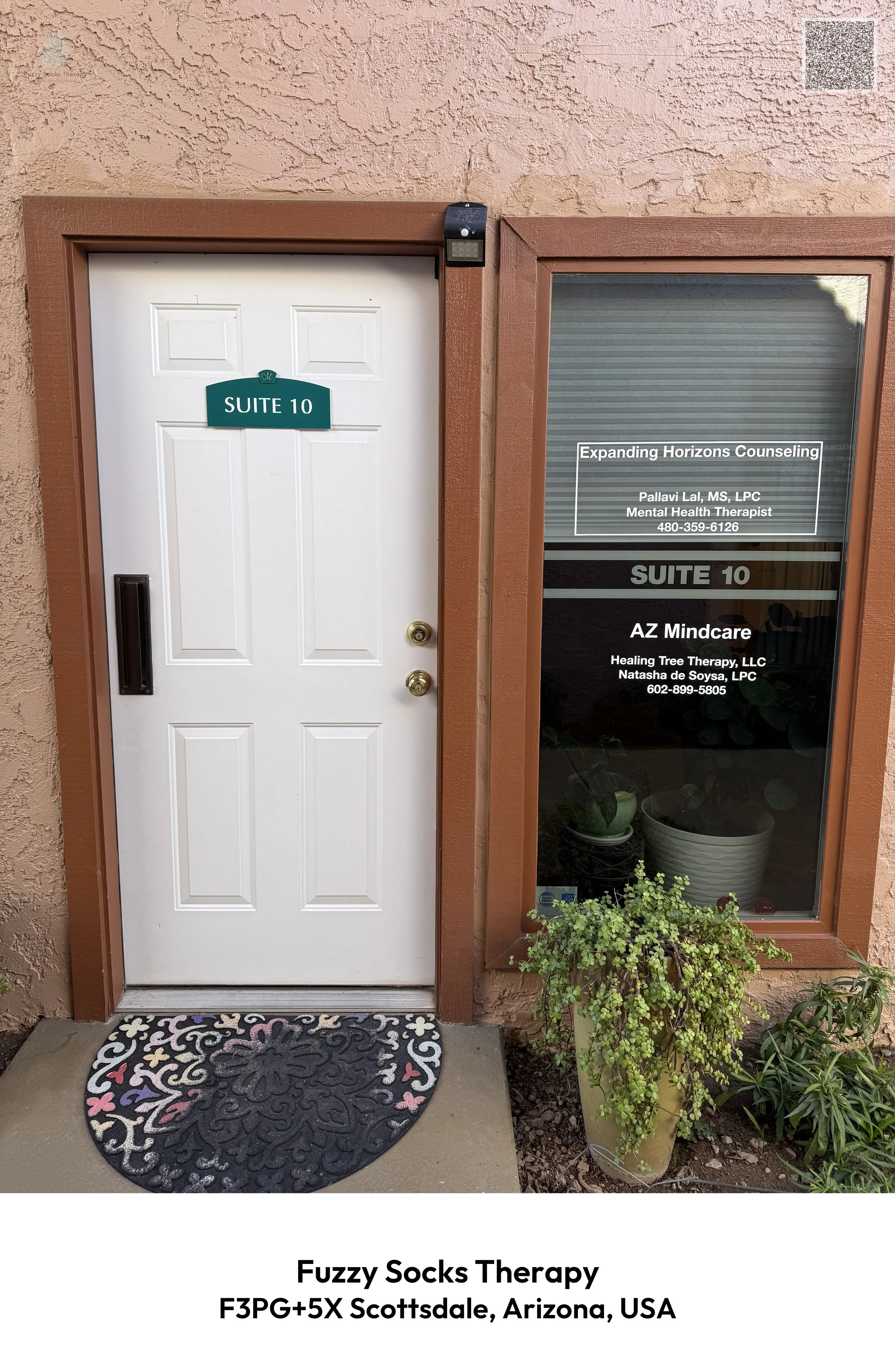
Address: 3295 N. Drinkwater Blvd., Suite 10, Scottsdale, AZ 85251
Phone: (720) 378-8454
Website: https://www.fuzzysockstherapy.com/
Email: [email protected]
Hours:
Monday: 9:00 AM - 5:00 PM
Tuesday: 9:00 AM - 5:00 PM
Wednesday: 9:00 AM - 5:00 PM
Thursday: 9:00 AM - 5:00 PM
Friday: 9:00 AM - 5:00 PM
Saturday: Closed
Sunday: Closed
Open-location code (plus code): F3PG+5X Scottsdale, Arizona, USA
Map/listing URL: https://maps.app.goo.gl/cqhwvXU4UMg6QL1YA
Embed iframe:
The practice offers in-person therapy in Scottsdale along with online sessions for clients in Arizona, Colorado, and Florida.
Clients can explore services such as trauma therapy, EMDR therapy, Deep Brain Reorienting Therapy, neurodivergent therapy, child therapy, couples therapy, discernment counseling, and parenting intensives.
Fuzzy Socks Therapy is especially relevant for people navigating trauma, dysfunctional family dynamics, ADHD, autism, relationship conflict, and emotional overwhelm.
The website presents a direct, practical therapy style focused on real tools and meaningful change rather than vague advice.
Scottsdale clients looking for trauma-informed psychotherapy can find support that combines deeper healing work with concrete skill building.
The practice also offers help for adult children of dysfunctional families, couples on the brink, and neurodivergent kids, teens, and adults.
To get started, call (720) 378-8454 or visit https://www.fuzzysockstherapy.com/ to book a free consultation.
A public Google Maps listing is also available for Scottsdale location reference alongside the official website.
Popular Questions About Fuzzy Socks Therapy
What does Fuzzy Socks Therapy help with?
Fuzzy Socks Therapy helps with trauma, dysfunctional family patterns, neurodivergence, relationship conflict, emotional overwhelm, and related challenges for individuals, couples, and families.
Is Fuzzy Socks Therapy located in Scottsdale, AZ?
Yes. The official website lists the office at 3295 N. Drinkwater Blvd., Suite 10, Scottsdale, AZ 85251.
Does Fuzzy Socks Therapy offer in-person and online sessions?
Yes. The official site says the practice offers in-person therapy in Scottsdale and online therapy in Arizona, Colorado, and Florida.
What therapy approaches are listed on the website?
The website highlights EMDR therapy, Deep Brain Reorienting Therapy, discernment counseling, play therapy, Dialectical Behavior Therapy, Emotionally Focused Therapy, and practical trauma-informed skill building.
Who provides therapy at Fuzzy Socks Therapy?
The official website identifies the therapist as Lianna Purjes.
Does the practice offer couples counseling?
Yes. The website includes couples therapy, couples intensives, and discernment counseling for couples deciding whether to stay together or separate.
Does the practice work with children and adolescents?
Yes. The site says the practice offers child therapy and support for children, adolescents, and their families.
How can I contact Fuzzy Socks Therapy?
Phone: (720) 378-8454
Email: [email protected]
Website: https://www.fuzzysockstherapy.com/
Landmarks Near Scottsdale, AZ
Drinkwater Boulevard is the clearest local reference point for this office and helps nearby clients place the practice in Scottsdale. Visit https://www.fuzzysockstherapy.com/ for service details.
Old Town Scottsdale is a familiar city landmark and a practical reference for people searching for therapy near central Scottsdale. Call (720) 378-8454 to learn more.
Scottsdale Civic Center is another recognizable local landmark that helps define the surrounding area for nearby professional services. The official website has current contact details.
Scottsdale Stadium is a well-known destination in the city and a useful point of reference for local users. Fuzzy Socks Therapy offers both in-person and online sessions.
Indian School Road is a major corridor that helps many residents orient themselves in Scottsdale. More information is available at https://www.fuzzysockstherapy.com/.
Fashion Square and the surrounding central Scottsdale area are widely recognized by local residents and visitors alike. Reach out through the website to book a free consultation.
Downtown Scottsdale is a strong local search reference for people seeking counseling and psychotherapy services in the area. The practice serves Scottsdale in person and multiple states online.
Scottsdale Road is another major route that helps define the broader service area for clients traveling from nearby neighborhoods. The practice supports individuals, couples, and families.
The Scottsdale arts and civic district is a useful area reference for those familiar with the city center. Visit the site to review specialties and next steps.
Central Scottsdale commuter corridors make this practice relevant for nearby residents who want in-person therapy, while online sessions add flexibility for clients in Arizona, Colorado, and Florida.